Regeneration news
Unlocking Growth at Scale: Lessons from Newham
At this year's London Real Estate Forum, the Royal Docks Team collaborated with London Legacy Development Corporation (LLDC), the London Borough of Newham, Transport for London (TfL) and Ballymore to explore how partnership working can unlock inclusive growth at scale. Here are some of the key themes and takeaways from the discussion.
London faces an increasingly urgent challenge: delivering the homes, jobs, infrastructure and investment needed to support a growing city. The question is not simply where growth should happen, but how to unlock it in ways that create lasting economic, social and environmental value.
With London's centre of gravity continuing to shift eastwards, Newham has become a key driver of the capital's growth story. Home to Queen Elizabeth Olympic Park, the Royal Docks, major transport infrastructure and globally recognised institutions, there are significant opportunities, alongside an imperative to ensure growth translates into tangible benefits for local people.
As the Royal Docks and LLDC move into pivotal delivery phases, and as Newham enters a new chapter under the local leadership of Mayor Forhad Hussain, there is a collective ambition to harness investment, innovation and collaboration to ensure current and future generations are active participants in Newham's success.
Putting residents first doesn't mean putting investors second. Our ambition is to create growth that works for both.
Forhad Hussain, Mayor of Newham
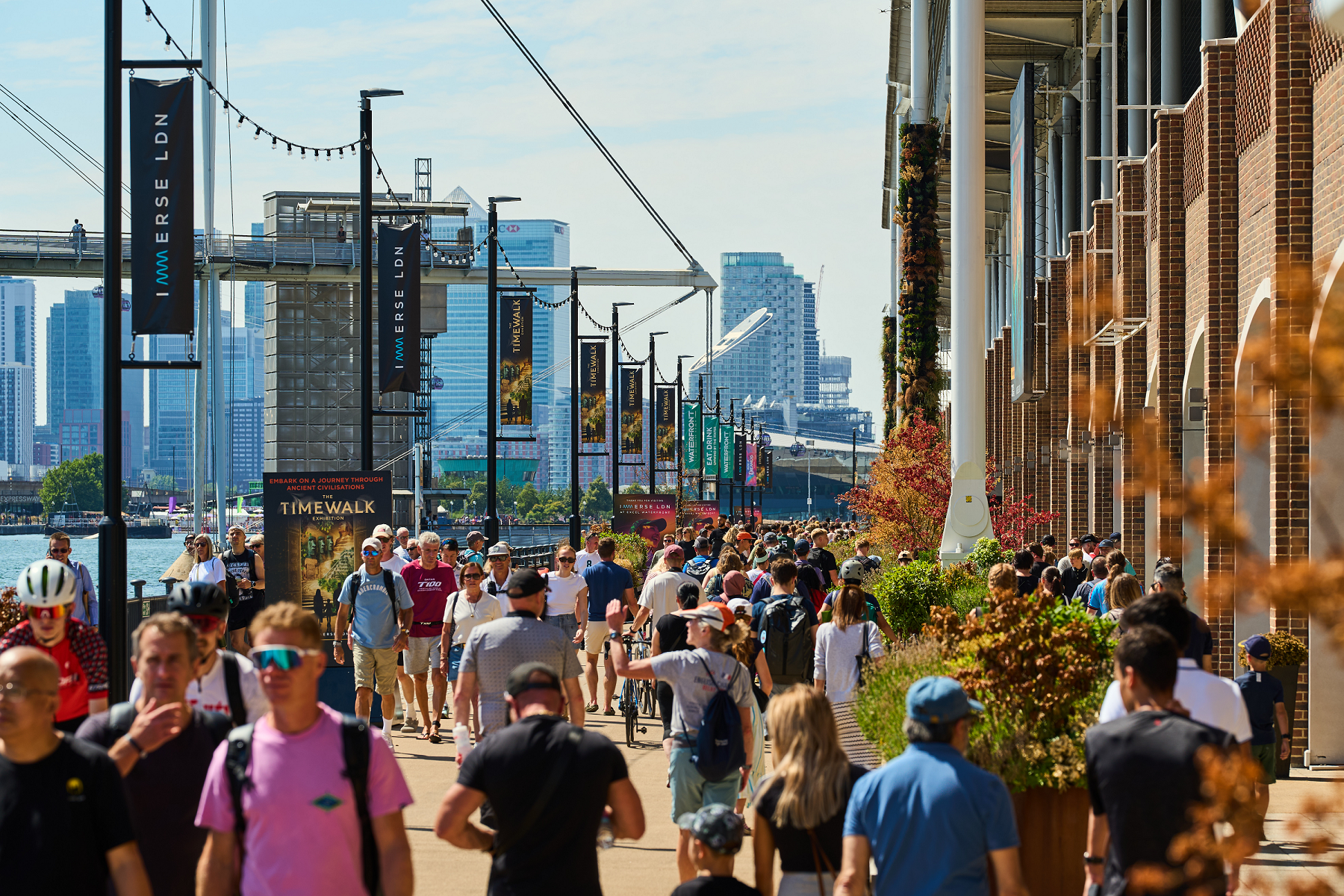
Excel London waterfront
Growth Needs Long-Term Leadership and Partnership
Growth at this scale is measured in decades, not years.
The Lower Lea Valley illustrates this clearly. The homes, jobs and economic opportunities being delivered today are the result of more than 15 years of sustained investment, partnership working and patient groundwork, enabled through collaboration between boroughs, the GLA, LLDC, infrastructure providers, developers and communities.
Queen Elizabeth Olympic Park demonstrates the importance of working beyond administrative boundaries. Stretching across Newham, Hackney, Tower Hamlets and Waltham Forest, the Park shows how some of London's largest growth opportunities require cross-borough collaboration. Guided by its Framework for Inclusive Growth, LLDC is working with partners to identify new opportunities to unlock the Park's potential, maximise its assets and drive long-term growth through investment, innovation, culture, skills and enterprise. LLDC’s new Development Strategy translates this vision into a clear, place-based programme for the Park’s remaining development opportunities, ensuring its completion as a coherent, inclusive and resilient place, with neighbourhoods where people and businesses can thrive.
The same principle applies in the Royal Docks. With more than £10bn of investment opportunities across multiple sites, success depends on aligning public and private partners behind a shared vision. Established by the Mayor of London and the Mayor of Newham, the Royal Docks Team provides a dedicated delivery partnership that helps coordinate activity, maintain momentum and attract sustained investment. Strong political leadership, business confidence and a shared ambition to see the area succeed have played a central role in progress to date.
From a developer's perspective, these partnerships are equally important in navigating the complexity of major sites, building trust and maintaining the confidence needed for long-term investment.
The lesson for London is clear: growth rarely follows organisational or borough boundaries. Unlocking it at scale requires long-term leadership, dedicated delivery partnerships and funding models capable of sustaining investment over decades.
We can't shy away from the complexity of these sites. Progress depends on trust, strong public-private partnerships and relationships with local organisations.
Stevan Tennant, Managing Director, Ballymore
Infrastructure as an Enabler, Not an Afterthought
Infrastructure does not simply support growth; it unlocks it. Transport, utilities, public realm and social infrastructure create the conditions for investment, connect people to opportunity and enable long-term growth.
This is particularly evident in Stratford, where major investment in transport connectivity, including the Elizabeth line, has helped establish one of London's most significant growth centres. That connectivity has underpinned the transformation of Queen Elizabeth Olympic Park and the surrounding area, enabling developments including East Bank, Here East, ABBA Voyage and Stratford Cross, alongside tens of thousands of new homes and jobs. Over the last five years, TfL, LLDC, Network Rail and Newham Council have worked together to make the case for Stratford Station enhancements, recognising that additional capacity is critical to future development.
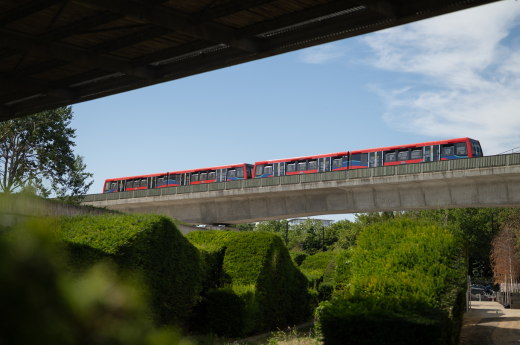
A similar story is unfolding in the Royal Docks. Investments including the Elizabeth line, London City Airport and the Silvertown Tunnel have reinforced the area's position as one of London's best-connected growth locations, helping unlock investment and support the next phase of development. Future projects, including the Royal Victoria Dock Bridge and the proposed DLR extension via Beckton Riverside to Thamesmead, have the potential to unlock significant new housing and employment growth across east London.
The message is simple: infrastructure needs to be planned ahead of growth, not in response to it.
We've seen how transformative transport investment has been for this part of London. But the story isn't finished. Further investment will be critical to unlocking the next phase of growth.
Andrew Lunt, Major Projects, Transport for London
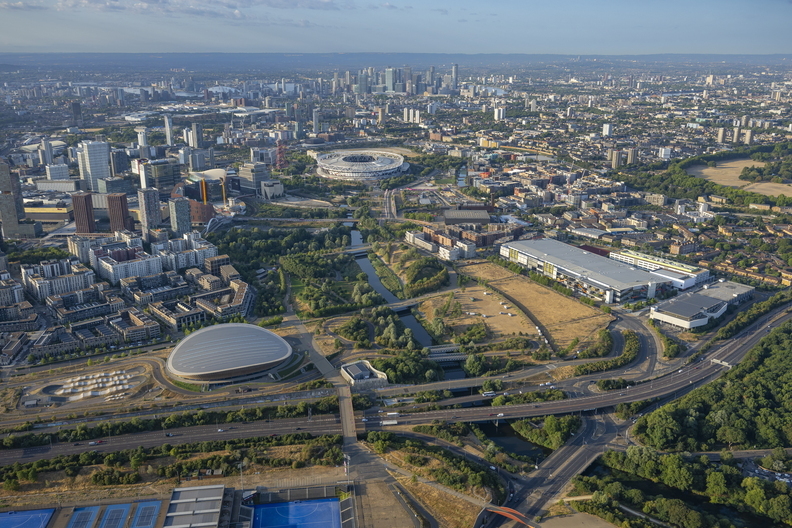
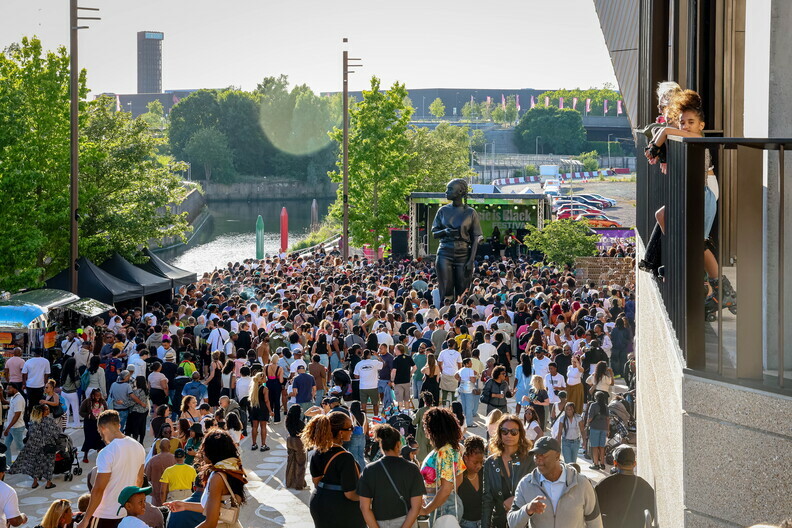
Left to right: Queen Elizabeth Olympic Park (QEOP); The Music is Black Festival from East Bank at QEOP
Photo credit: Jason Hawkes
Connecting Local Opportunity to London's Global Economy
Newham is home to globally recognised institutions, visitor destinations and business hubs, alongside some of London's most diverse communities. The challenge is not simply attracting investment and visitors, but ensuring growth creates opportunities for local people, businesses and neighbourhoods.
Recognised in the Mayor's London Growth Plan as one of London's three innovation districts, Queen Elizabeth Olympic Park brings together innovation, education, culture and business, with strengths in the creative, digital, advanced manufacturing and green economy sectors. Since 2012, investment has generated £3.5bn in annual GVA and supported 38,300 jobs across the Legacy Area, with the potential to grow to £5.5bn and support a further 13,300 jobs by 2035. The Park serves as a real-world testbed for innovation, helping turn new ideas into solutions that deliver tangible benefits for local people, including plans for a Green Futures Hub to help local people develop the skills needed to support London’s transition to a net zero economy.
The Royal Docks has a long history as a centre of world trade and industry. Today, that legacy continues through major global businesses such as Tate & Lyle, Bühler and London City Airport alongside a growing ecosystem of creative industries, innovation and the visitor economy. Excel London attracts more than eight million visitors annually, while investment in the Royal Docks Centre for Sustainability, developed in partnership with the University of East London, is opening up new pathways for local people into green skills, innovation and the industries of the future. The Royal Docks Climate Agreement brings together businesses and institutions across the area around a shared commitment to climate action, sustainable growth and local opportunity.
Together, these examples point to a wider lesson for London: the next frontier may be less about attracting global investment and institutions, and more about embedding them within local economies. When major destinations, employers and innovation assets are connected to local people, they can become powerful drivers of inclusive growth and long-term prosperity.
We can create an ecosystem where commercial growth and positive outcomes for local people go hand in hand.
Shazia Hussain, Chief Executive, London Legacy Development Corporation

Building Communities and Stewarding Places
The ultimate measure of regeneration is not what gets built, but whether people's lives improve as a result. Jobs, skills, affordable homes, culture, public realm and community infrastructure all play a role in creating places where people and businesses can thrive over the long term.
Research from UCL's Prosperity in East London study highlights both the benefits of regeneration and ongoing challenges around affordability, economic security and access to opportunity, reinforcing the need to focus on long-term social outcomes alongside development.
As Queen Elizabeth Olympic Park continues to evolve, the focus is shifting from physical transformation to long-term impact with a focus on community co-creation to deliver inclusive growth. Through initiatives such as the Community Anchor Network, and Elevate, which supports youth leadership, local communities are helping shape priorities, ensuring that the Park's assets, international profile and opportunities create benefits that are shared more widely across east London.
In the Royal Docks, the ambition is to create places that are not only transformed through investment, but shaped, managed and sustained for the long-term benefit of local communities. This includes exploring new approaches to stewardship that give communities a greater role in shaping their neighbourhoods and establish sustainable arrangements for managing shared spaces and assets. Emerging plans to open up 12 hectares of water at Royal Victoria Dock West for leisure, culture, nature and wellbeing illustrate the opportunity to make the area's distinctive assets more accessible and valuable to residents and visitors alike.
But stewardship also raises a longer-term question: who takes responsibility for places as they evolve? Local authorities and organisations like LLDC have an enduring role in coordinating investment, maintaining accountability and ensuring the benefits of regeneration continue long after individual development projects are complete. Yet the true measure of success is whether communities are empowered to take control of their own spaces and help shape their future.
In ten years' time, success will mean Newham is recognised for its thriving neighbourhoods – places where people want to live, work and build their futures.
Dan Bridge, Programme Director, Royal Docks Team
What Needs to Happen Next?
Newham's experience shows that delivering growth at scale requires more than identifying development sites. Many of London's remaining opportunities sit on complex sites constrained by infrastructure, viability and fragmented ownership. Unlocking them will depend on long-term partnerships, coordinated investment and delivery models capable of overcoming those challenges.
The lessons are clear: infrastructure must be planned proactively, global investment must be connected to local opportunity, and communities must continue to benefit long after construction ends. Success depends not only on identifying sites for development, but on creating the partnerships, institutions and funding models capable of turning ambition into delivery.
As Newham, LLDC and the Royal Docks enter their next phase, they offer an important test case for how London can unlock growth in complex places while delivering lasting economic, social and environmental value. Together, they demonstrate that with sustained leadership, collaboration and investment, regeneration can create not just new places, but new opportunities for Londoners and the capital as a whole.